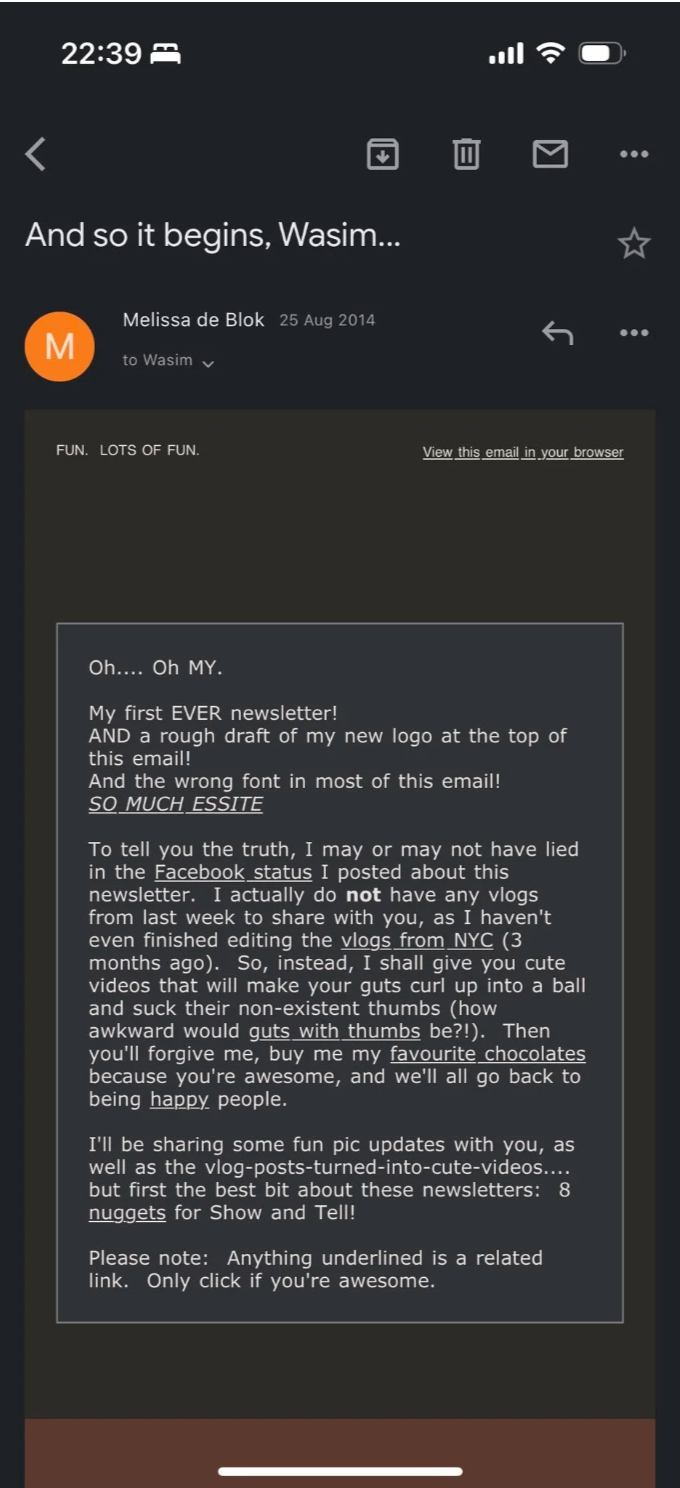
12 years ago - before social media was used to share things that weren’t just your personal images - I decided to make a weekly newsletter called “Melissa Mondays”, where I’d share helpful things I found on the internet. And cat pictures. And some of my art news. (Keep scrolling all the way to the bottom for an ancient example of said newsletter)
It was whimsical and sassy, and full of the courage to be a little bit weird at a time when professionalism rules and newsletters like that just weren't the thing you did as creative business owner. I felt so weird for it - "why would anyone want to sign up to a newsletter that had pure chaos and no niche?" - I eventually gave up on the whole thing. It certainly ached a decade later when I discovered that this wasn't just a thing now, but people were actually earning their income off it (Years later, I would take a CliftonStrengths test and discover Futuristic as one of my top 5 strengths)!
I digress (I do this often).
It took me a few more years of planning a Very Serious Fantasy Novel (much respectable, so honorary) and a massive existential crisis to realise that my voice is only really authentic when I'm being my chaotic, sassy, whimsical Melissa Monday self.
Now, as a writer who cares more about the cadence and feel of words than the actual storyline (possibly due to my 30 years of songwriting), I'm obsessed with etymology - so all of the things I've named in the last 18 years of being in business, from offerings to brands, have involved lots of research into the etymology of potential words. Last week I discovered the etymology of the word "silly", after realising I use that word to describe myself and the things I love a lot. Despite it having negative connotations, something about the word just felt so affectionate and loving in my body.
Middle English seli, seely, from Old English gesælig "happy, fortuitous, prosperous" (related to sæl "happiness"), from Proto-Germanic sæligas (source also of Old Norse sæll "happy," Old Saxon salig, Middle Dutch salich, Old High German salig, German selig "blessed, happy, blissful," Gothic sels "good, kindhearted").
etymonline.com
One of my big themes in my fiction writing is the demonisation of that which was previously sacred. It is no surprise, then - at least to my kismet-loving self - that I would be so enamoured by this word that once was akin to being blessed, only to eventually be toppled by public perspective.
The word's considerable sense development moved it by various streams from "happy" through "blessed;" "pious;" "innocent" (c. 1200), to "harmless," to "pitiable" (late 13c.), "weak" (c. 1300), to "feeble in mind, lacking in reason, foolish" (1570s).
etymonline.com
Alas, a weekly schedule did not fit in my extreme chaos at the time. Melissa Mondays became less weekly and more “whenever I remember”. I changed mailing list providers 50 times - and somehow had the same people sign up every time - and eventually let life drown me into no longer working on the newsletters.
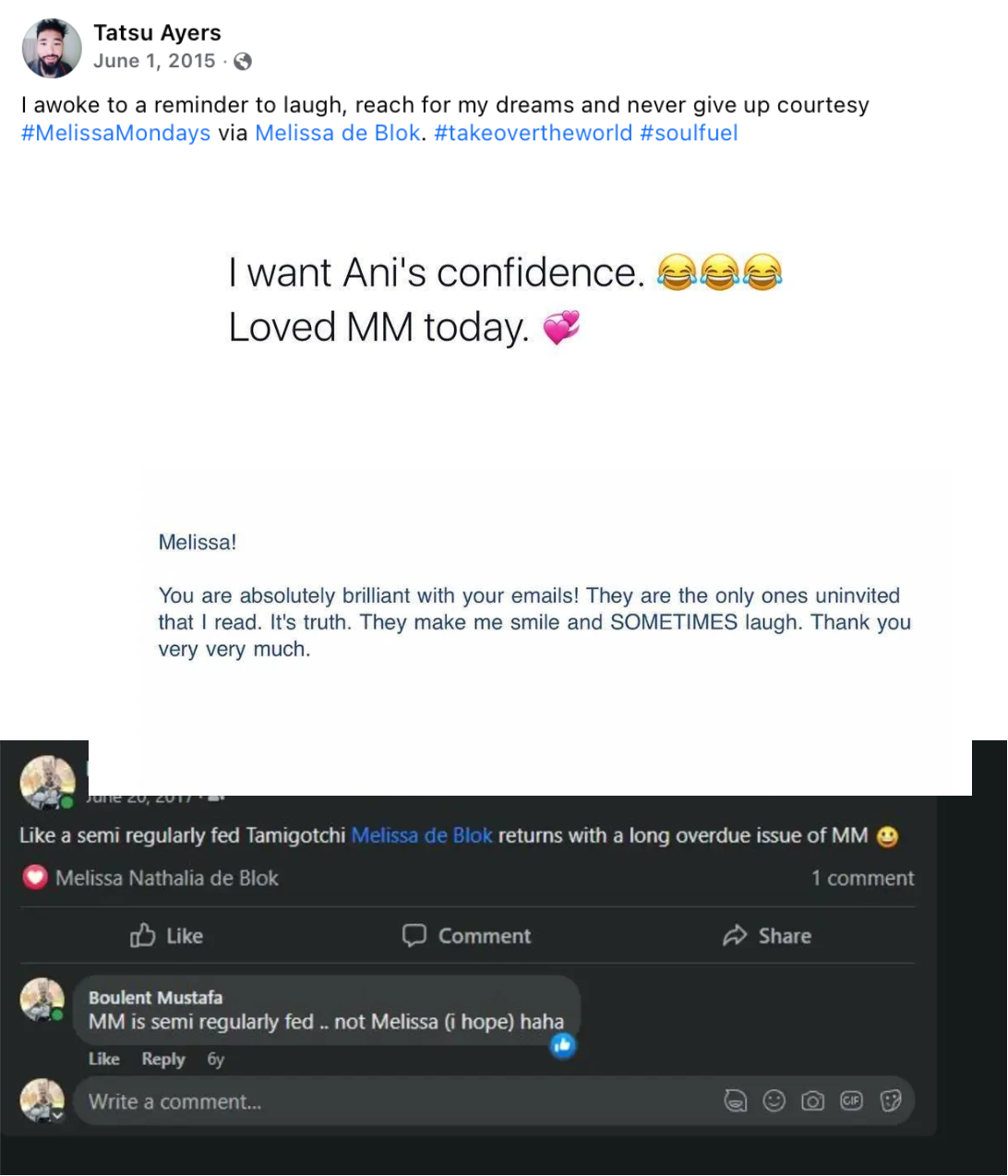
Now, 12 years later - God I'm old - I have come to the realisation that my silliness, my whimsy, my chaos - all the things I was criticised for - are actually my strengths. And so, I bring you (back): Melissa Mondays!
Thank you for joining me.